Salon International des Inventions de Genève

Author name: Céleste Zufferey

Salon des Inventions - Quand la technologie soigne

Must-sees for Thursday, 12 March

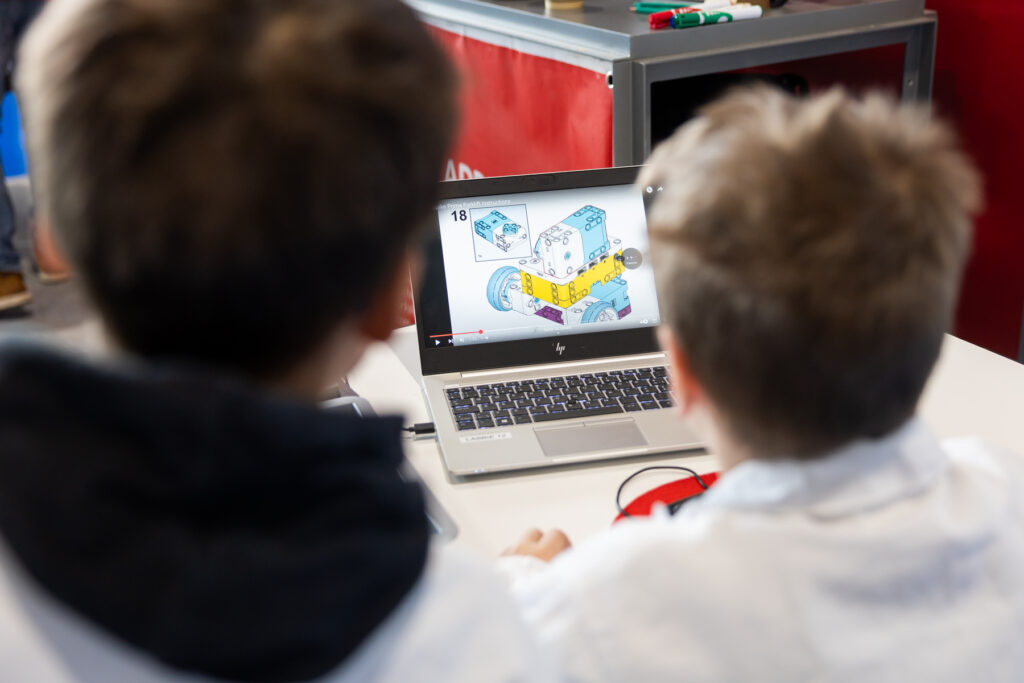
Must-sees for Thursday 12 March Between health, design and artificial intelligence On Thursday 12 March, the International Exhibition of Inventions Geneva will put HealthTech in the spotlight at the Swiss Pavilion. Prevention, diagnosis, treatment and the organisation of care: this themed day shows how health technologies are already transforming medicine and opening up very concrete perspectives for both patients and healthcare professionals. Three conferences will mark this highlight of the day At 11:30 a.m., André Klopfenstein of Creaholic will present Not designed for MedTech… but perfectly suited to it, a conference in French. At 2:30 p.m., the Swiss Center for Design and Health will raise a question that is both simple and essential with What’s design got to do with it?, reminding us that innovation in health does not rely solely on technical performance, but also on usability, experience and attention to people. At 4:00 p.m., Dr. Selwa Al-Hazza will continue the discussion with a conference in English on the predictive power of artificial intelligence in prevention, diagnosis and advanced treatment. This programme will also offer the opportunity to discover the many players present at the Swiss Pavilion, including innovative startups as well as recognised organisations such as Creaholic, Switzerland Global Enterprise, the Swiss Center for Design and Health and Switzerland Innovation Park West EPFL. Discoveries for younger audiences too From 9:30 a.m. to 6:00 p.m., the association Robotique Créative will offer interactive robotics activities for children aged 6 to 12, including the construction and programming of models using LEGO® Education kits. At 10:30 a.m. and 2:00 p.m., a workshop by WIPO and the Swiss Federal Institute of Intellectual Property will explain in an accessible way how copyright protects creativity in the age of YouTube, TikTok, Instagram and ChatGPT. The Exhibition offers a glimpse of a form of healthcare that is more connected, more predictive and more personalised, while also being more attentive to uses and to the human experience. Enjoy your visit! Programme Catalogue of inventions

Must-sees for Thursday, 12 March Read More »
Salon des Inventions 2025 C) Pierre Albouy

Must-sees for Wednesday, 11 March

Must-sees for Wednesday, 11 March Between ecological transition and discovery To launch its 51st edition, the International Exhibition of Inventions Geneva is putting CleanTech centre stage at the Swiss Pavilion, with a programme dedicated to technologies, services and business models capable of reducing the environmental impact of human activities. Events not to be missed at the Swiss Pavilion At 10:00 a.m., Didier Faure, founder and managing director of Transit-On, will deliver an original talk on risk management, drawing parallels between wingsuit flying, planetary boundaries and the constraints of the real world. At 11:00 a.m., Charlotte Melly will look back on 15 years of CleantechAlps and the rise of a truly dynamic Swiss innovation ecosystem. At 3:00 p.m., Raphaël Domjan, a leading public figure in sustainable innovation in Switzerland, will continue this momentum with a conference on innovation in the service of the energy transition. Explore, understand and experiment This opening will also give pride of place to children and families. Throughout the day, Scienscope, the science outreach centre of the University of Geneva, will offer interactive workshops led by scientists. Quantum physics will be the common thread, presented in a lively and accessible way. From 1:30 p.m. to 6:00 p.m., Digital Kidz will invite children aged 4 to 12 to explore coding, robotics and artificial intelligence through a workshop designed for hands-on learning and experimentation. A dedicated AI workshop will also be offered from 4:00 p.m. to 5:20 p.m., in 20-minute slots, for children aged 7 to 12, upon registration. Between sustainable innovation, scientific discovery and youth workshops, this opening sets the tone for the 51st edition: an Exhibition focused on the future, while never losing touch with reality. Programme Catalogue of inventions

Must-sees for Wednesday, 11 March Read More »

Salon des Inventions

Can artificial intelligence truly take physical form?

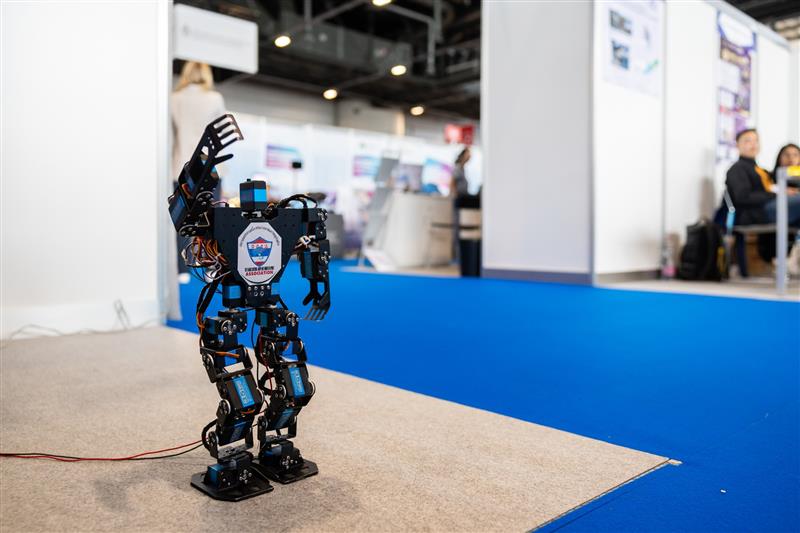
Can artificial intelligence truly take physical form? When AI leaves the screen We tend to associate artificial intelligence with software, invisible algorithms, and digital assistants. But what happens when AI interacts directly with the physical world? When it perceives, moves, adapts, and responds to its environment in real time? This is precisely the challenge of Physical AI. Machines that perceive and act Physical AI emerges from the convergence of sensors (cameras, microphones, tactile sensors) and advanced AI models. These systems analyze their surroundings and instantly adjust their behavior. They can avoid an unexpected obstacle, adapt their grip to handle a fragile object, or modify their trajectory in the presence of a human. Far from being futuristic, this technology is already used in logistics, transportation, and healthcare. According to some projections, humanoid robots could reach one billion units by 2050, mainly for industrial and commercial applications. Switzerland, a laboratory for intelligent robots Driven by its innovation ecosystem, Switzerland is positioning itself as a strategic hub for mobile robotics and biorobotics. Its ability to connect scientific research with concrete applications is fostering technologies that are useful, safe, and aligned with societal needs. Two conferences to explore the stakes On Friday, March 13 at the Swiss Pavilion, two sessions will delve into this technological shift: At 2:00 pm, MiRALab will present Nadine, one of the most realistic social humanoid robots in the world. Capable of conversing in multiple languages and remembering past interactions, Nadine illustrates the transition from abstract AI to a physical presence able to interact with us. At 3:30 pm, “Why AI Needs Us,” presented by NGSENS, will address questions of consciousness, responsibility, and value creation. Because while machines can learn, they never operate outside a human framework. The conference will be held in French. By giving intelligence to movement and interaction, Physical AI is reshaping our relationship with machines. Programme

Can artificial intelligence truly take physical form? Read More »

Salon des Inventions - Quand la technologie soigne

When Technology Heals

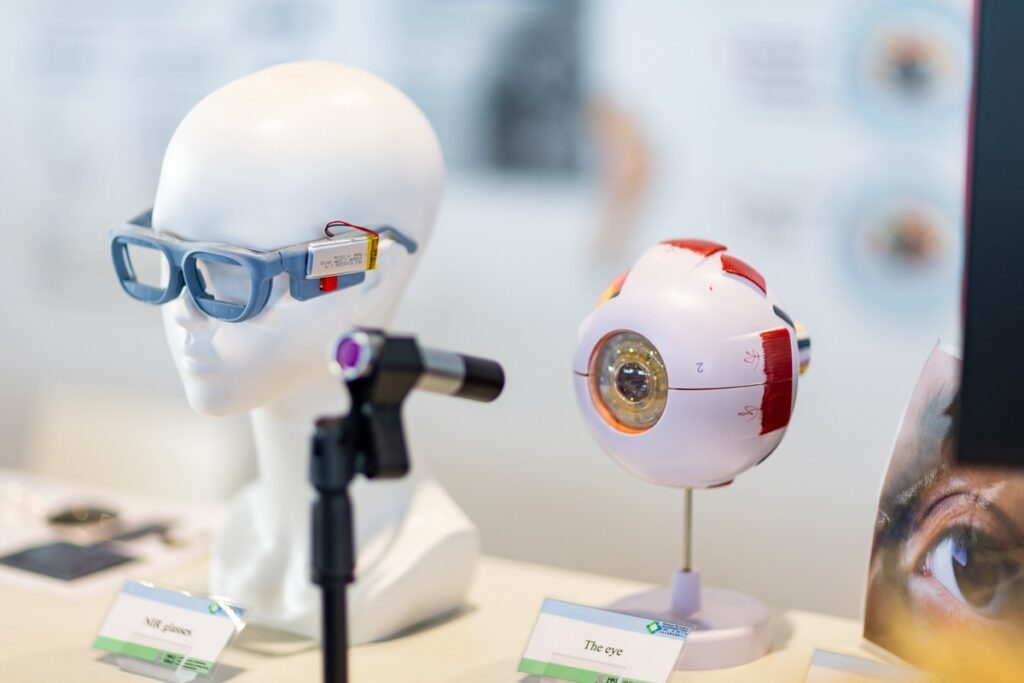
When Technology Heals More Precise, More Human Medicine On Thursday, March 12, the Inventions Geneva will spotlight health technologies in the Swiss Pavilion. Artificial intelligence, innovative medical devices, and digital diagnostic support tools: HealthTech is profoundly transforming prevention, treatment, and the organization of care. In the face of an ageing population and growing pressure on healthcare systems, these innovations address a major challenge: improving quality of care while controlling costs. Automated medical image analysis, remote patient monitoring, and hospital process optimization are making medicine faster, more personalized, and increasingly preventive. A Strategic Ecosystem Switzerland ranks among the most dynamic countries in medical technologies and life sciences. Specialized startups, university hospitals, and research institutes work closely together to turn scientific discoveries into concrete solutions. At the Exhibition, these innovations take shape through Swiss startups attending the dedicated day on Thursday 12 March at the Pavilion, as well as among the hundreds of inventions on display. HealthTech innovations will be easy to spot thanks to the pictogram displayed on the booth banners. The Pavilion HealthTech exhibitors Two Conferences at the Swiss Pavilion Two sessions will highlight the connections between innovation, design, and industrial performance: Not Designed for MedTech… but perfectly suited to it, hosted by André Klopfenstein (Creaholic), Thursday, March 12, 11:30–12:00 (in French). What Is Design Doing in All This? presented by the Swiss Center for Design and Health, Thursday, March 12, 14:30–15:00. Two key moments to see how design and engineering give HealthTech that extra layer of intelligence that makes all the difference. The conferences programme

When Technology Heals Read More »

Salon des Inventions 2024 (c) Manon Voland

Cleantech that’s good for the planet

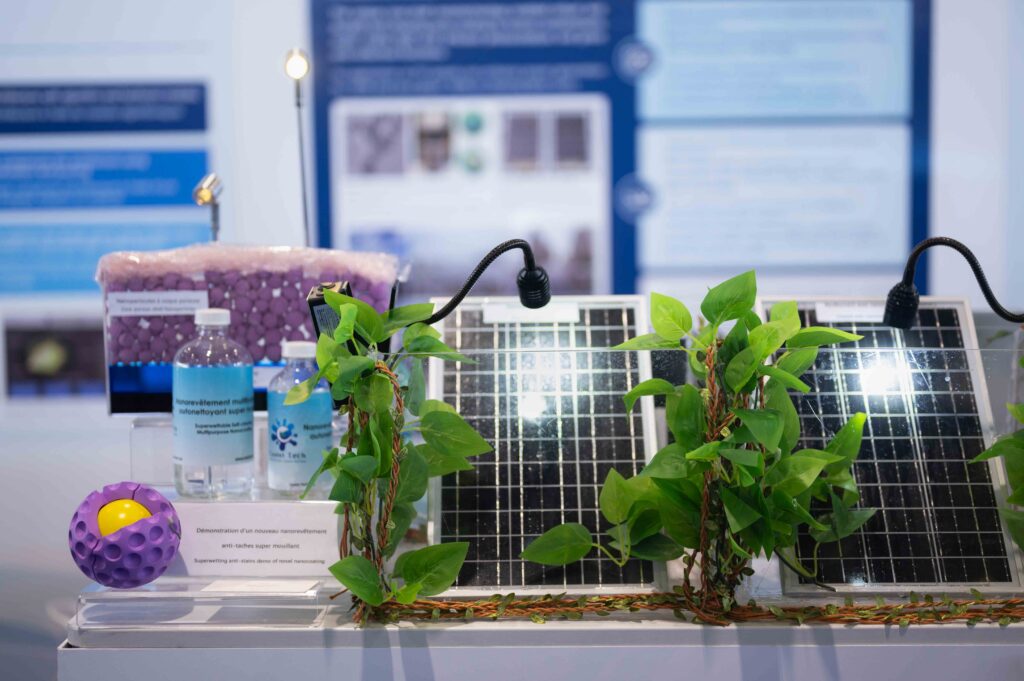
Cleantech that’s good for the planet Producing and consuming differently On Wednesday, March 11, the Swiss Pavilion will host a day dedicated to CleanTech, short for clean technologies, meaning technologies, services, and business models designed to reduce the environmental impact of human activities and use resources more efficiently. The ambition is clear: to produce, move, and consume differently, while limiting greenhouse gas emissions, pollution, and waste. Spectacular global growth Worldwide, the sector is expanding rapidly. In 2024, investments in energy transition surpassed those in fossil fuels for the first time. Switzerland, a particularly dynamic ecosystem Switzerland stands out as a highly favorable environment for clean technologies. Around 5.5% of jobs are linked to CleanTech, and nearly 50 startups are created each year. More than a quarter of the energy consumed already comes from renewable sources, and the portfolio of Swiss cleantech patents grew by around 20% between 2018 and 2022. Concrete innovations to discover at the Exhibition At the Swiss Pavilion, in addition to the many startups present, several conferences will shed light on these issues, including: -IPI Cleantech Patent Landscape from the SDG Perspective & Insights on Thematic Innovation Landscapes, by Dr. Kamran Houshang Pour, intellectual property expert, Wednesday, March 11, 11:30–12:00 -SGE Export Promotion, Cleantech and Infrastructure Support – the role and importance of IPR in international projects, by Xavier Cornut (S‑GE) and Nathalie Goetschi, (IPI), Wednesday, March 11, 13:15–13:45 Two sessions to see not only how CleanTech is invented, but how it is protected, scaled and deployed internationally. At the heart of the Exhibition, you can discover numerous solutions, including cleantechs, which can be identified by the pictograms on the booth banners. Discover the Pavilion

Cleantech that’s good for the planet Read More »

©Pierre Albouy - Salon International des Inventions de Genève 2025

Can you really invent at four years old?

Can you really invent at four years old? A competition for children and young people This is one of the new features of the International Exhibition of Inventions Geneva. The competition “ Inventeur·rices de demain – Young Talents” allows children and young people aged 4 to 18 to present their ideas to a jury of professionals. The idea may seem surprising. Can you really invent at four years old, an age when handwriting is still hesitant and colouring sometimes goes outside the lines? Inventing begins with seeing differently History shows, however, that early creativity is not a myth. In 1961, at the age of five, a young American, Robert W. Patch, imagined a transformable toy truck. A year later, his invention was patented, making him the youngest patent holder in the United States. An exceptional but revealing case: inventing is not only a matter of technical mastery; it is first and foremost a way of observing, asking questions and trying things out. Children already think like researchers Research in developmental psychology confirms this intuition. Young children spontaneously formulate hypotheses, experiment, observe results and adjust their ideas. Their curiosity constitutes an early form of scientific reasoning. The work of psychologist E. Paul Torrance also highlighted their remarkable ability to produce new and unexpected ideas. This potential does not disappear with age, but it can fade when environments value the right answer more than exploration or unexpected questions. Encouraging curiosity from an early age The “Inventeur·rices de demain – Young Talents” competition offers young people a space to imagine, build and present their ideas. It stimulates creativity, builds confidence and creates links between schools, families and the professional world. Because inventing often starts with a simple question: “What if we tried a different way?”  At the Inventions Geneva, discover projects in three categories: 8–12 years old, 12–15 years old, and 15–18 years old.  Browse the list of participants

Can you really invent at four years old? Read More »